In My Autism Mom Era Love SVG Review
As a professional embroidery digitizer and product reviewer, I approach every new file with a specific question: will this design survive the transition from screen to stitch? When evaluating the In My Autism Mom Era Love SVG, my assessment goes beyond the digital aesthetic. I am looking at how this graphic translates into a tangible, wearable statement for a community that values authenticity and comfort. This design is not merely a collection of vectors; it is a potential centerpiece for custom apparel and personalized gifts that carry significant emotional weight.
First Impressions and Emotional Resonance
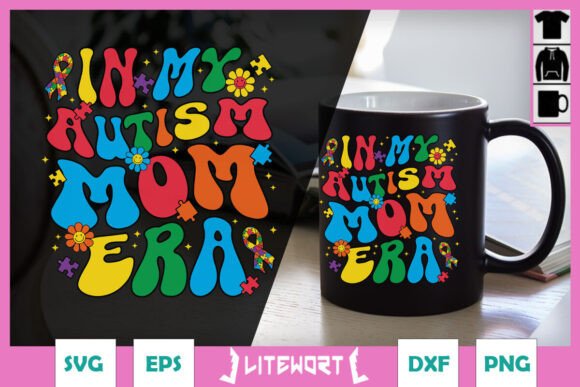
Upon importing the file into my design software, the first thing that stands out is the balance between modern typography and sentimental imagery. The phrase "In My Autism Mom Era" taps into current cultural language while maintaining a timeless message of advocacy and love. Visually, the layout feels organic rather than rigid. For an embroidery project, this is crucial. Designs that are too blocky can feel heavy on fabric, while those that are too sparse may lack definition. This graphic strikes a middle ground, offering enough visual mass to be recognizable from a distance without overwhelming the garment.
The included PNG with a transparent background allows for immediate visualization. Before I even thread my machine, I use this high-resolution asset to create printable mockups. This step is vital for Etsy sellers and small shop owners who need to gauge customer interest before committing to production. The clarity of the PNG suggests that the lines are clean, which usually bodes well for the vector paths in the SVG and DXF files. However, as any experienced maker knows, a clean screen image does not always guarantee a smooth stitch-out. The true test lies in the physical application.
Real-World Application: The Custom Sweatshirt Test
To properly evaluate this design, I simulated a real-life scenario common among craft business owners: creating a custom embroidered sweatshirt for a client. Sweatshirts are a staple in the neurodivergent parent community because they offer sensory comfort and practical warmth. I chose a mid-weight cotton fleece in a muted sage green, a popular choice for modern handmade products.
When positioning the In My Autism Mom Era Love SVG, I considered the "pre-sized for cups" note in the product description. While optimized for tumblers, embroidery requires different scaling. I resized the design to fit a 4x4 hoop size for a left-chest placement. This is where the designer’s judgment comes into play. If the original file was designed strictly for sublimation or vinyl, the details might be too fine for thread. In this case, the lettering appeared robust enough to handle satin stitch conversion, but I remained cautious about intricate serifs or thin connecting lines.
During the test stitch-out, I paid close attention to the interaction between the design and the fabric texture. Fleece has a pile that can swallow small details. I used a medium-weight cutaway stabilizer to prevent puckering and ensure the registration remained tight. The result was a design that felt integrated with the garment rather than sitting stiffly on top. This integration is what separates professional commercial embroidery from amateur attempts. For a finished product intended as a holiday gift or boutique merchandise, this level of quality builds immediate customer trust.
Navigating Fabric Choices and Technical Constraints
While this design performs beautifully on stable knits, it requires careful consideration when applied to other mediums. As an embroidery file, its versatility depends entirely on your technical adjustments. Here are specific scenarios where caution is necessary:
- Stretchy Fabrics: If applying this to a lightweight t-shirt or baby clothes, you must use adequate stabilizer. The design likely contains fill stitch areas that can cause distortion on thin jersey knits if not properly supported.
- Textured Surfaces: On terry cloth towels or plush blankets, the detail level may get lost. You might need to add a knockdown stitch underneath the design or simplify the file elements to maintain readability.
- Curved Items: Although pre-sized for cups, embroidering on curved surfaces like caps requires specialized hooping. Ensure the design height does not exceed your cap frame’s limit, as vertical distortion is common.
- Dark Fabrics: Always test thread color contrast. A design that looks vibrant on a white screen may disappear on navy fabric. Use high-contrast thread colors or add a white underlay base to make the colors pop.
For makers creating embroidered patches or tote bag designs, the structural integrity of the file is paramount. Patches require dense border stitching, and tote bags often involve thicker canvas. In these cases, verify that the stitch density is sufficient to cover the fabric weave completely. Gaps in coverage can make a handmade product look unfinished.
Commercial Viability and Brand Consistency
For creative entrepreneurs and digital product sellers, the value of this asset extends beyond a single project. The inclusion of both SVG and DXF formats ensures compatibility across various cutting machines and embroidery software platforms. This flexibility is essential for businesses that offer both physical goods and digital downloads. However, before listing any finished product or digital embroidery file for sale, you must confirm the licensing terms. Never assume commercial rights are included; always verify whether you can sell the physical embroidered items, the digital files, or both.
From a branding perspective, the In My Autism Mom Era Love SVG offers strong recognition potential. It speaks directly to a niche audience, which is excellent for targeted marketing. When used consistently across custom apparel, nursery decor, and kitchen towels, it helps establish a cohesive shop identity. Buyers in this category are often looking for validation and community connection. A professionally executed embroidery project using this design signals that you understand their journey. Conversely, a poorly stitched version with tension issues or misaligned text can damage your reputation instantly.
Essential Designer Notes for Success
Before you commit this design to a final project, adhere to these practical guidelines derived from professional experience:
- Always Test First: Never stitch directly onto a valuable garment without testing on scrap fabric of similar weight and texture. Check for thread breaks, tension issues, and registration errors.
- Verify Hoop Compatibility: Even if the file says "pre-sized," measure your actual hoop area. Machine manufacturers define hoop sizes differently. Ensure there is adequate clearance for the presser foot.
- Check Stitch Types: Open the file in your embroidery software to inspect the stitch types. If the design is purely vector art, you will need to digitize it or convert it using auto-digitizing tools. Verify that text is converted to stitches and not just outlines.
- Evaluate Washability: If creating baby embroidery or tea towels, consider the longevity. Satin stitches hold up better than running stitches in frequent washing. Adjust the design parameters if the item will face heavy wear.
- Mockup Realistically: Use the provided PNG to create realistic previews, but adjust the lighting and shadows to match the actual thread sheen. Digital assets should accurately represent the tactile nature of the finished product.
Final Thoughts on Value and Execution
The In My Autism Mom Era Love SVG represents more than just a graphic; it is a tool for connection. For the embroidery designer, its success relies on technical proficiency and empathetic execution. Whether you are crafting a personalized gift for a friend or building inventory for a craft fair, treat this design with the respect it deserves. Pay attention to the interplay of thread colors, fabric texture, and stabilizer choices. By prioritizing quality over speed, you ensure that the final embroidered piece honors the sentiment behind the words. In the world of handmade crafts and commercial embroidery, that attention to detail is what transforms a simple file into a cherished keepsake.